Blog
Central Heating Servicing: a complete guide for Wirral homeowners
Central heating servicing: an essential guide for Wirral homeowners
If you live on the Wirral — whether a Victorian terrace in Birkenhead, a modern semi in Heswall or a coastal property in Hoylake — regular central heating servicing keeps your home warm, safe and efficient. This guide explains what a service covers, what you can check yourself, and why an annual inspection from a Gas Safe engineer matters.
Why service your central heating every year?
- Safety: Gas appliances must be checked for combustion safety and carbon monoxide risk. Optimal Heating is Gas Safe registered and carries out flue and combustion checks as standard.
- Reliability: A serviced boiler is less likely to fail during the cold snap. Many manufacturer warranties (Worcester, Vaillant, Glow‑worm and others) require regular servicing to stay valid.
- Efficiency: Clean burners, descaled heat exchangers and correctly set controls use less gas or electricity — good for bills and the planet.
- Longevity: Routine maintenance reduces wear on the pump, expansion vessel and valves, extending the life of the system.
Optimal Heating brings 20 years' experience and a background as a former British Gas engineer — practical knowledge that shows in thorough, regulation‑aware servicing.
What a full central heating service includes
A competent Gas Safe engineer will follow a checklist. Typical elements are:
- Visual inspection of boiler and controls (combi, system or heat‑only)
- Combustion analysis and flue inspection for gas boilers
- Check of central heating pressure and expansion vessel condition
- Inspection of valves, pump, condensate trap and electrical connections
- Clean or replace filters and clear magnetic traps where fitted
- Test thermostats, programmers and TRVs (thermostatic radiator valves)
- Check for leaks at joints, cylinders and radiators
- Safety checks on any unvented cylinders to G3 unvented and water regs standards
- Advice on system performance and any recommended repairs or improvements
A thorough service should conclude with a written report and energy‑saving recommendations.
Simple checks every Wirral homeowner can do between services
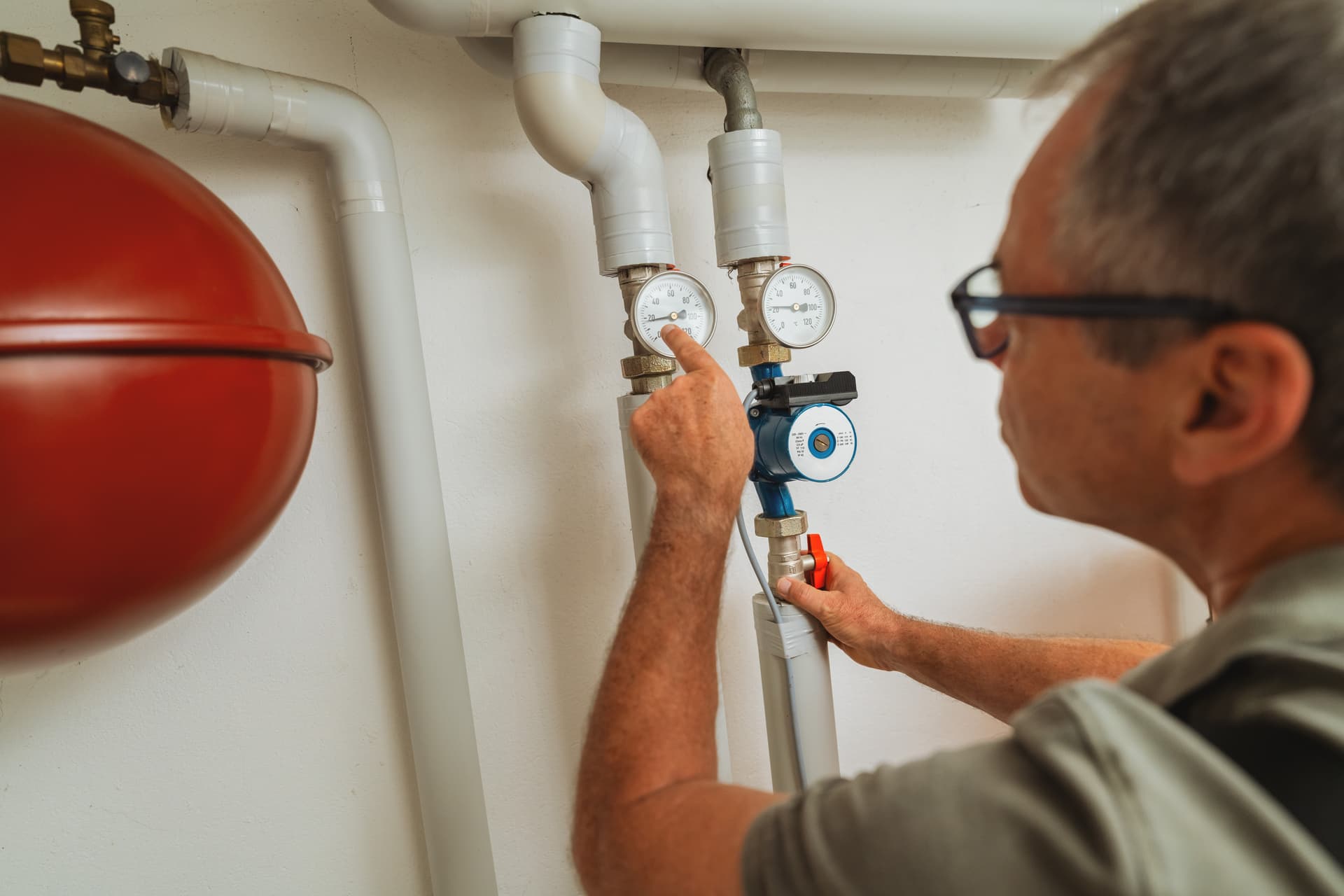
- Check the boiler pressure gauge: most systems sit around 1–1.5 bar when cold. If it’s significantly lower, your system may need repressurising.
- Bleed radiators that are cold at the top: air in the system reduces heat output. Use a radiator key and catch a small amount of water in a bowl.
- Listen for unusual noises: kettling, banging or a noisy pump can indicate limescale, trapped air or a failing component.
- Inspect visible pipework and the boiler casing for drips or rust, especially in coastal properties where salt air accelerates corrosion.
- Test your carbon monoxide alarm and replace batteries annually.
If any DIY check reveals persistent low pressure, repeated air‑bleeding or visible leaks, book an engineer rather than attempting complex repairs yourself.
Common faults identified at servicing (and what they usually mean)
- Low pressure: often a small leak or loss of water via the pressure relief valve. Can also indicate a failing expansion vessel.
- Limescale and kettling in older heat exchangers, especially in hard‑water areas — reduces efficiency and may require descaling or replacement.
- Blocked condensate traps on condensing boilers causing fault codes in cold weather.
- Faulty motorised valves or pump failures that leave rooms cold even when the boiler runs.
A qualified engineer will diagnose the root cause and advise on repair or parts replacement.
Preparing for an engineer’s visit — a quick checklist
- Clear access to the boiler, airing cupboard and hot water cylinder.
- Note any fault codes or noises and the times they occur (e.g. on ignition, or after running hot water).
- Have appliance manuals if available — and the warranty papers for any new boiler.
- If you have an unvented cylinder, confirm when it was last serviced; these need specific checks to G3 unvented regulations.
When to call a Gas Safe engineer now
If you smell gas, hear a persistent gas‑style hissing, see soot around the flue or have symptoms of carbon monoxide (headaches, nausea, dizziness), switch off the appliance, ventilate the area and get an emergency Gas Safe engineer immediately.
For non‑emergencies — poor heat distribution, repeated low pressure, noisy operation or service due — book a scheduled service. Regular maintenance prevents most breakdowns and keeps warranty conditions intact.
Final notes — service, safety and local expertise
Central heating servicing is more than ticking boxes. It’s about understanding how coastal exposure, property age and system type affect performance in Wirral homes. Optimal Heating combines 20 years' hands‑on experience, Gas Safe, G3 unvented and water regs certifications, and long‑standing manufacturer partnerships with Worcester, Vaillant and Glow‑worm to deliver servicings that protect safety, efficiency and warranty cover.
For a clear service report, practical recommendations and a responsive booking in Wirral, Liverpool and Chester, ask Optimal Heating for a home‑visit and quote. Regular servicing saves hassle — book a check while the weather’s still mild and avoid the winter rush.
Other Articles